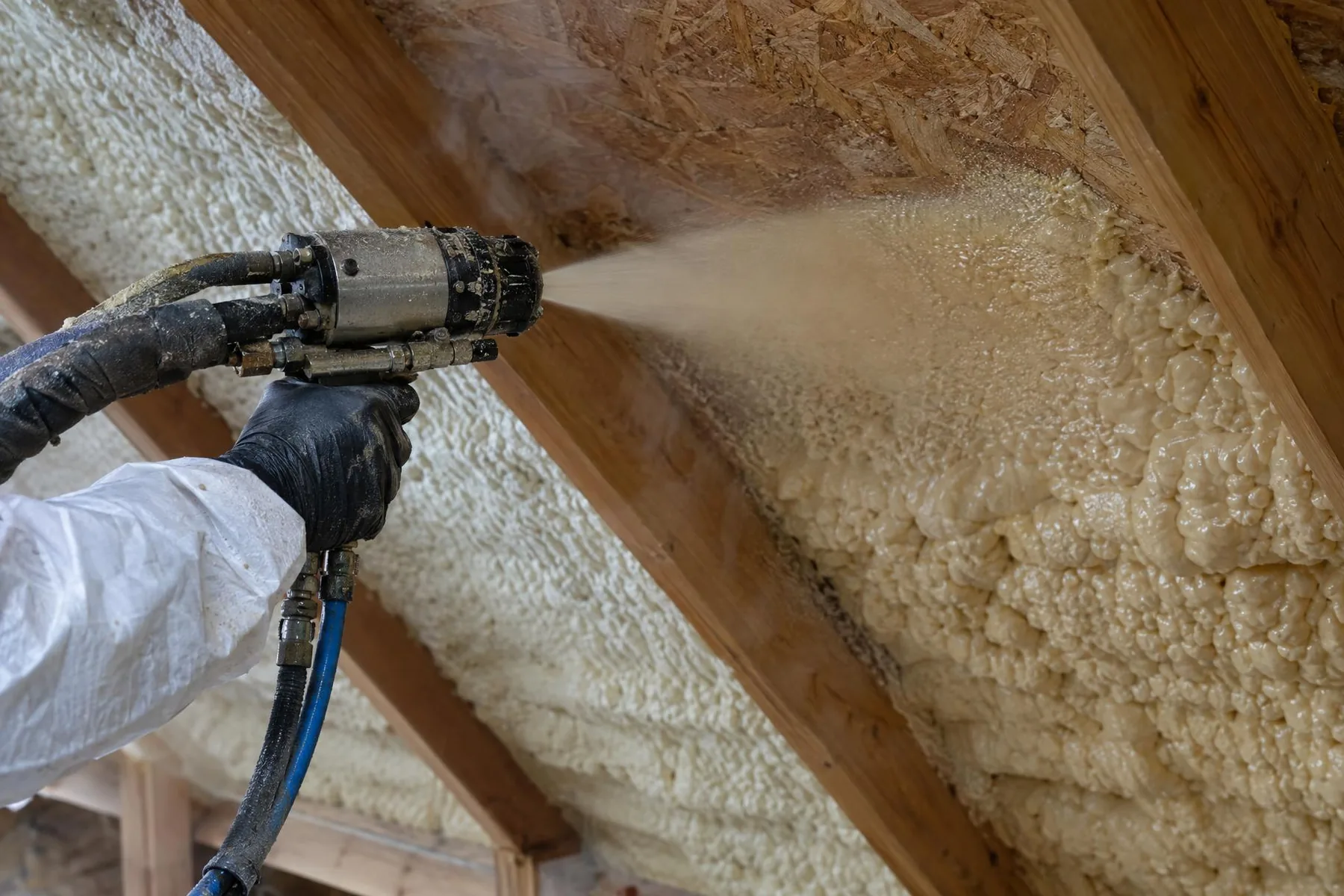
Gloved hand holding a spray gun applying cream-colored foam to the underside of a roof deck between rafters

Blown-In Insulation Experts in Avondale Arizona: Attic Blown In Insulation and Cellulose Blown In Insulation

Affordable Blown-In Insulation and attic blown in insulation in Avondale, AZ and Maricopa County

Insulation in an Avondale attic wears out gradually, and Avondale Spray Foam Insulation brings it back with blown in insulation. We work for homeowners throughout Avondale and Maricopa County, laying attic blown in insulation over existing floors, using cellulose or fiberglass loose-fill and hauling out material that has failed. Cellulose and fiberglass both carry an R-value per inch, and the written estimate lists the material, the depth and the total R-value before work starts.

Why homeowners choose us:

  • Free written estimates for every insulation job
  • Open-cell and closed-cell foam matched to the surface, not one product for everything
  • Written warranty on every installation
  • Licensed and insured certificate on request

Every attic gets the benefit of 15+ years working with foam and loose-fill, plus 1,000+ attics, walls and buildings finished. Since the same team also sprays foam, our estimator tells you honestly when loose-fill suffices and when foam serves better. A written warranty backs the installation, and the floors under the hatch stay covered the whole time.

Get a FREE Spray Foam Insulation Quote

What Blown-In Insulation Involves in Avondale, AZ

Cellulose and fiberglass cost different amounts per inch of depth, and old insulation that has matted or gone damp is hauled out first. The jobs below are available, and you pick which ones go into your attic and which you would rather leave out:

  • Attic top-up over existing insulation adds depth where the layer is thin but dry, so it suits attics with sound material underneath.
  • Cellulose blown in insulation is rated R-3.1 to R-3.8 an inch, giving the most resistance for every inch of depth.
  • Fiberglass blown in insulation is rated R-2.2 to R-2.9 an inch and barely settles, holding its depth year after year.
  • Old material removal pulls out matted, wet or pest-damaged insulation so fresh material lands on a clean floor.
  • Air sealing at the ceiling plane closes gaps around wiring, pipes and fixtures, so cooled air stays below the insulation.
  • Eave baffles hold open the airflow channel at the edge of the roof, so new material never blocks the vents.
  • Depth markers fixed to the rafters let you read the finished depth with your own eyes.

When You Need Blown-In Insulation in Avondale

A thin attic layer announces itself in the rooms underneath. These are the signs Avondale owners notice first, and each one hints at insulation that has worn down with age.

Signs Your Avondale Attic Needs Blown-In Insulation

  • Hot upstairs bedrooms absorb heat from an attic that may reach 130 degrees, which means the layer above them is too thin.
  • Visible ceiling joists show that the insulation sits lower than the framing, and R-value drops across the whole floor.
  • Matted, flattened material has lost the loft it relied on and needs a top-up or a replacement.
  • Cooling that never stops by afternoon frequently comes from a ceiling that lets heat drop through, and deeper insulation slows it.
  • Original insulation from the 1980s or 1990s has probably outlived its life, and the crew inspects its condition before adding more.

Why Blown-In Insulation Is Harder in Avondale

Heat above 130 degrees lets loose-fill settle over the years, so the estimate states a depth instead of a guess. Three points below set the material, the depth and the prep on every estimate.

Heat That Tests the Layer Every Summer

Phoenix once endured 70 days at 110 degrees or higher, compared with a usual 21. Attic air climbs to roughly 130, while air in the ducts starts near 55. A shallow layer passes that heat into the ceiling, so depth counts for more here than in a cooler region. The room below warms, and the air conditioner works longer to hold its setting.

Aging Layers in Older Neighborhoods

Garden Lakes goes back to 1986, with Harbor View built from 1989 to 1993 and Loma Point II from 1993 to 1996. Loose-fill is rated for two to three decades, and harsh heat can wear it down by year 15. Cellulose also compacts about 10 percent once installed. An attic from the early 1990s probably holds a layer that has thinned and packed down, and the crew compares it with the depth fresh material would reach.

Code and Rebates in Avondale

Insulation work here follows the 2024 energy code the city adopted, and Avondale Development Services handles permit questions. We check your address before quoting. APS customers can claim a $250 Home Performance rebate when a participating contractor does the installation, so ask whether your attic qualifies. The answer on permits goes into your estimate, so nothing is left open on the day we arrive.

How Much Does Blown-In Insulation Cost in Avondale, AZ?

Price follows attic size, material, depth and whether old insulation must go first. The two materials cost different amounts, and removal adds labor beyond the new product. Higher R-value calls for more depth, which calls for more material and time. A free written estimate fixes the exact price for your Avondale attic. See the full spray foam pricing guide for every job type, and attic spray foam insulation if you want foam instead.

Job Typical price Key variables
Blown-in insulation, attic $900 to $3,600 attic size, material, depth, old insulation removal
Blown-in insulation, typical project $800 to $3,000 attic size, R-value, air sealing, roof vents
Spray foam, attic floor $1,100 to $6,800 attic size, foam type, thickness, access
Spray foam, attic rafters or roof deck $1,500 to $9,000 roof size, foam type, thickness, vents
Spray foam, typical single project $1,300 to $4,000 surface, foam type, thickness

Our Blown-In Insulation Process in Avondale, AZ

Loose-fill jobs run in one sequence, so new material settles onto a clean, sealed floor at the depth quoted. Attic size, existing depth and hatch access change the plan, and the estimator notes each one on the estimate.

1. Free Estimate and Attic Inspection

Inside the attic, your estimator measures the layer in place and inspects for moisture, damage, pests and gaps near the eaves. A free written estimate lists the material, the final depth and the R-value. Lines stand alone, so you can add air sealing, skip removal or weigh the bid against a second contractor’s. Photos of the attic and a note about problem rooms are welcome before the visit.

2. Clearing and Preparing

When old insulation must leave, the crew vacuums and bags it. Baffles are set along the eaves, and openings around wires, pipes and fixtures are sealed shut. Walkways and the hatch get covered to avoid scuffs on the way in, and drop cloths go below the hatch before any material goes up. Dust is kept low by working steadily and keeping the hatch covered.

3. Blowing in the Material

A blower at the truck feeds loose material up a hose, and the installer spreads it to the target depth in the attic. Work begins in the far corners and moves back to the hatch. Even coverage over the entire floor matters more than a deep pile in one place, so low patches are filled as the crew goes.

4. Measuring and Marking

Depth is read at many spots around the attic and checked against the estimate. Markers on the rafters keep the level visible afterward, and thin areas get more material while the machine is still running. The measured depth and R-value reach you in writing before packing up. The written readings stay with your estimate paperwork for later reference.

5. Cleanup and Walkthrough

The hoses come out, the hatch gets resealed and bags of old material go with the crew. Floors under the hatch are swept, with a check for stray fiber in the rooms. Then you walk the finished attic holding the warranty paperwork. Nobody needs to vacate the house for loose-fill, though the hatch should stay shut until the dust settles.

Blown-In Insulation FAQs: Avondale, AZ

How much does blown in insulation cost in Avondale?

Most attics land between $900 and $3,600, and a typical project falls from $800 to $3,000. Size, material, depth and removal of old insulation decide where yours sits. The written estimate states the exact figure.

Is cellulose or fiberglass better for an Avondale attic?

Cellulose rates R-3.1 to R-3.8 an inch and compacts around 10 percent once installed. Fiberglass rates R-2.2 to R-2.9 and compacts very little. Our estimator picks one after seeing your attic and the depth required.

How long does blown-in insulation last?

Blown-in insulation is rated at 20 to 30 years or longer, depending on the type, moisture and any disturbance. Intense heat can wear it down near year 15, which is why older Avondale attics deserve inspection.

Is blown-in better than foam for an attic?

Loose-fill is the most economical option for attics with drywall already up and for awkward spaces. Foam carries a higher price and a longer life, so see the attic spray foam insulation page for that option, and the residential page for walls.

Can new material go over old insulation?

Dry, clean insulation in decent shape can stay with fresh material layered over it. Anything matted, wet or contaminated is removed beforehand. The estimator inspects and tells you which case you have.

Does APS offer a rebate for attic insulation?

APS customers may receive a $250 rebate through the Home Performance program for work by a participating contractor. Ask our office if your attic job is eligible.

Do I need a permit for blown-in insulation in Avondale?

The crew confirms permit requirements with Avondale Development Services before the start date. Phone the office with your address and the estimate includes the answer.

Avondale Spray Foam Insulation serves Avondale and Maricopa County.

Get a Free Blown-In Insulation Quote in Avondale, AZ

(623) 240-9099 Get a Free Quote